Event · Brand · Landing · 2026
DevWeek 26: Less Hype, More Doing
An event that started at home
DevWeek began in 2021 as an internal event, an initiative from the marketing team for Elaniin’s devs. We saw so much potential in it that we opened it to the public. The idea was to bring the community together, give good talks, leave something positive behind and, along the way, put Elaniin on the map.
Over the years there were in-person editions and digital ones. This year we came back to in person, with a different approach: instead of chasing volume, we aimed to reach a strategic group we could really give something to, and that Elaniin could also get something from.
Why less hype
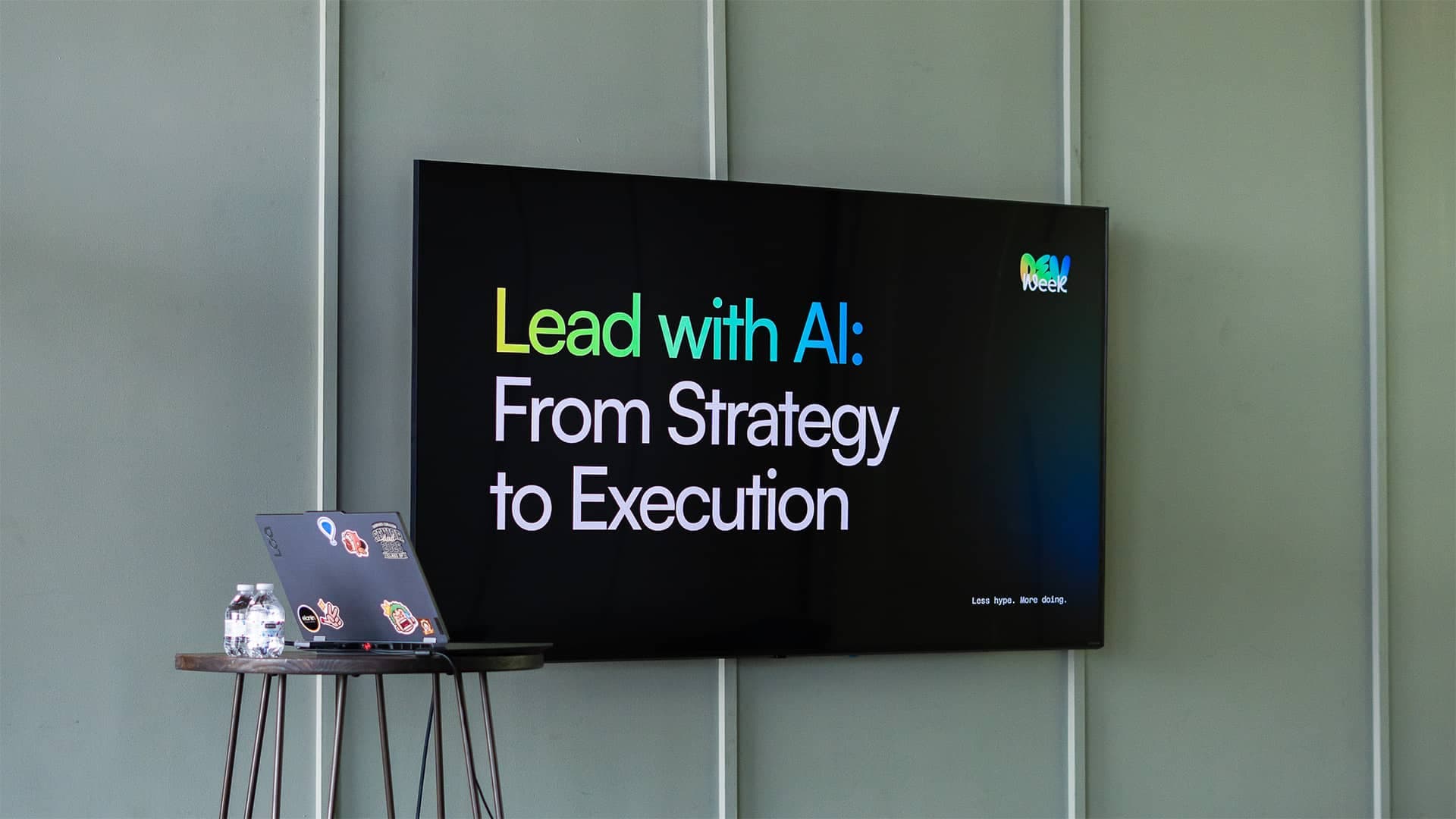
Open TikTok today and everyone says AI is magic, that it does everything on its own. It doesn’t. That is why the line was Less Hype, More Doing: to really strengthen what people and companies can do, with no smoke.
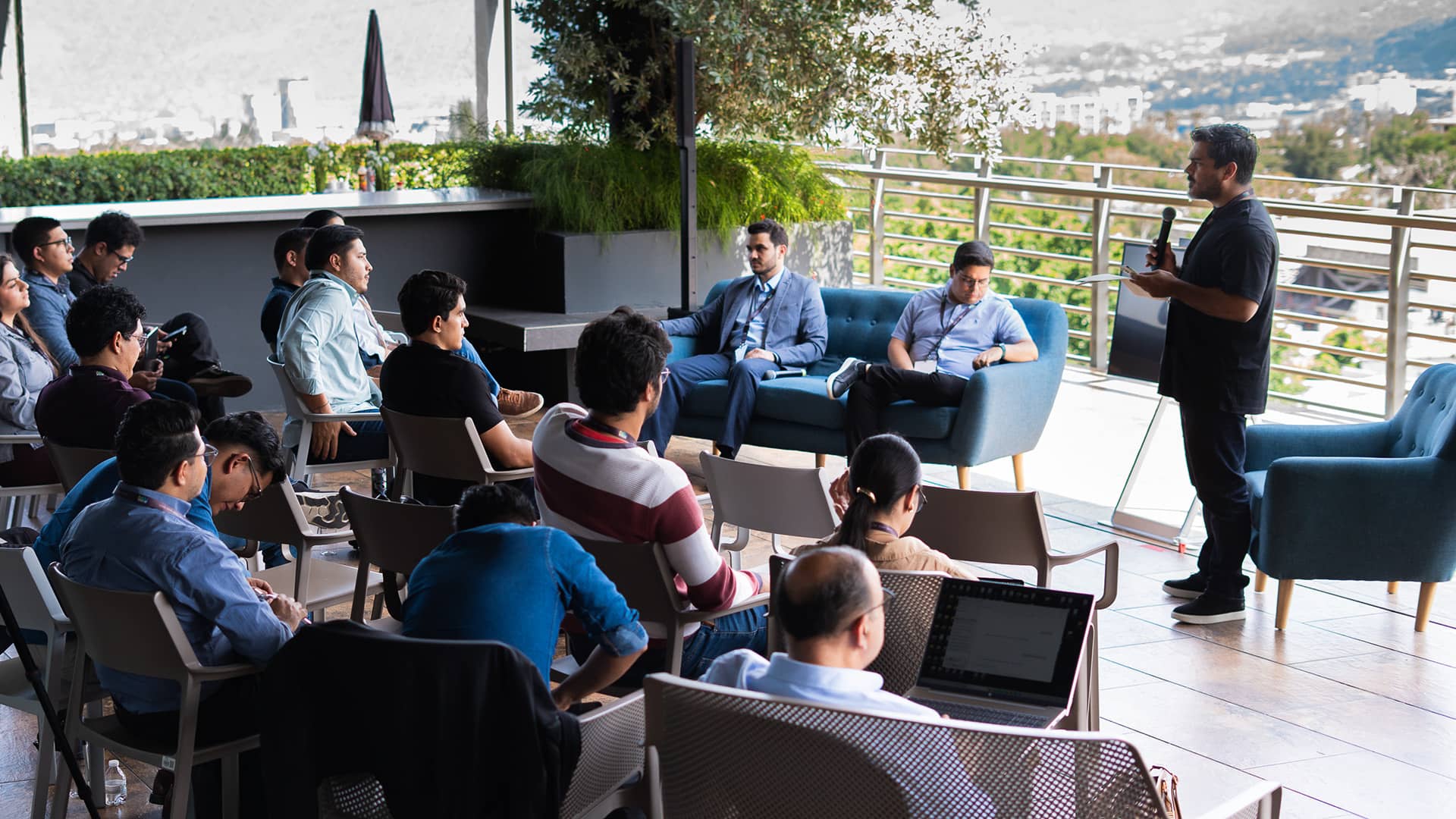
The program had to say the same thing. There were prompt engineering sessions and sessions on how to bring AI into a company strategically. Three Elaniin clients, whose results with our solutions are real, talked in front of the audience in a close, relaxed way. And we closed with networking, to swap contacts and ideas.
The campaign started there: a cursor, a “Hello there” and a question that lands on the event’s line, This year isn’t just to talk about AI. It’s about building with it.
What we made by hand
The logo, the key visuals, the style definition and the adaptation of every piece came from traditional processes. The animations were made by someone on the team, and so was the event photography.
My part was being there from the start: building the visual ecosystem, supporting the team across animation, photography and graphic design, and helping on strategy to strengthen the ideas.
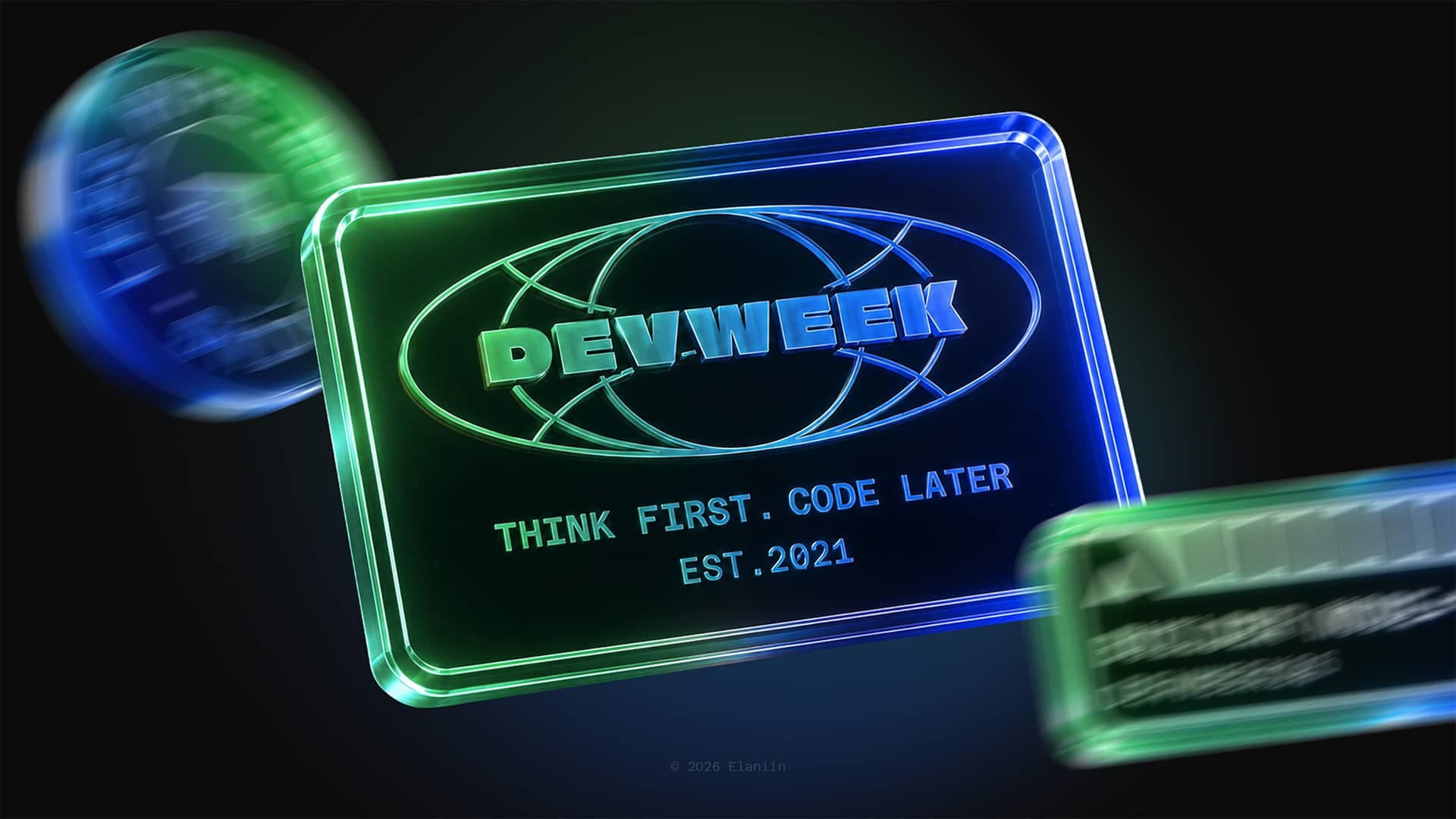
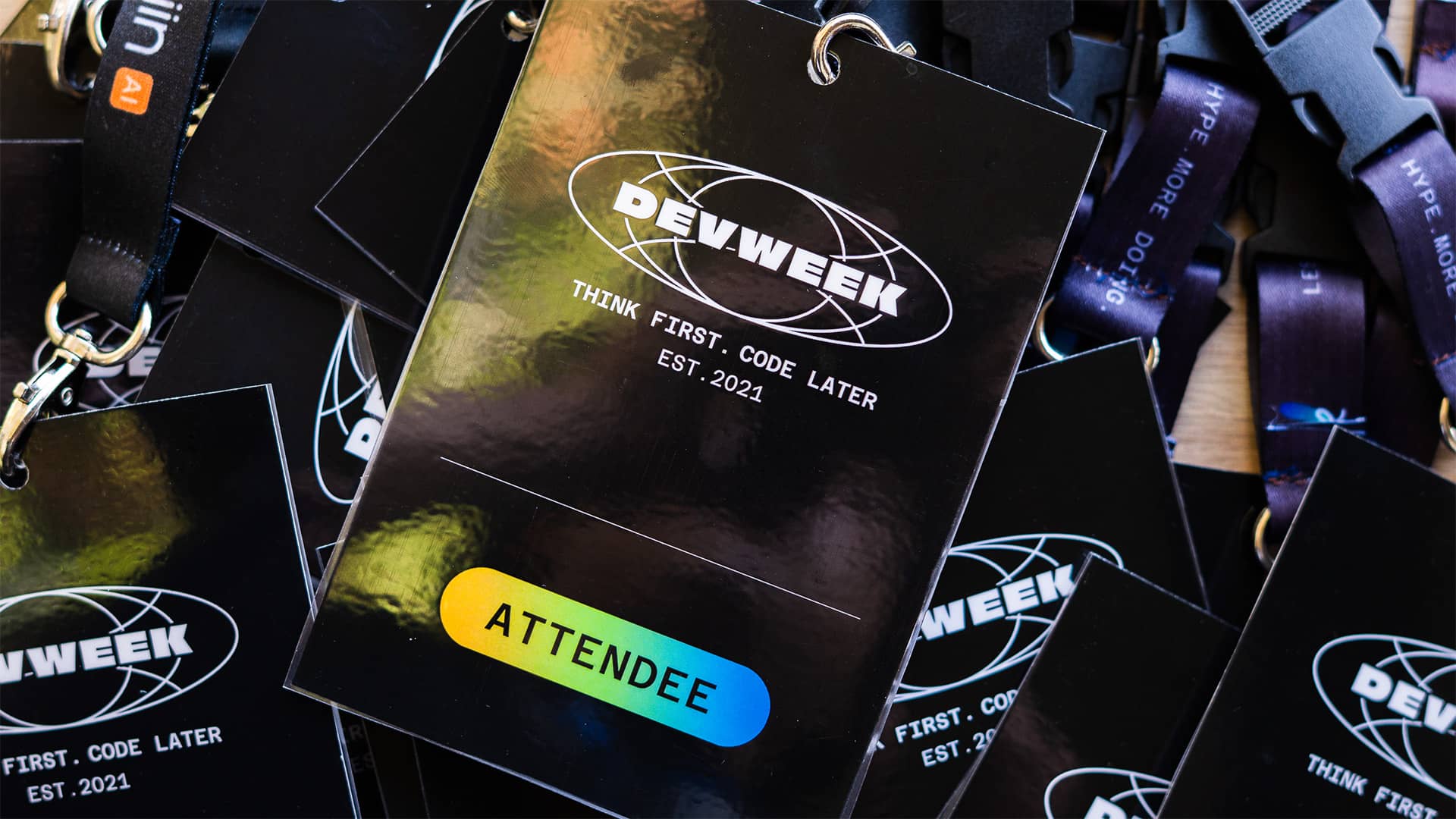
The world is dark and technical, with a single gradient from yellow to green to blue that we kept for the moments that matter. A second line, Think first. Code later., lives only in a few pieces: the credentials, certain stickers and the 3D.
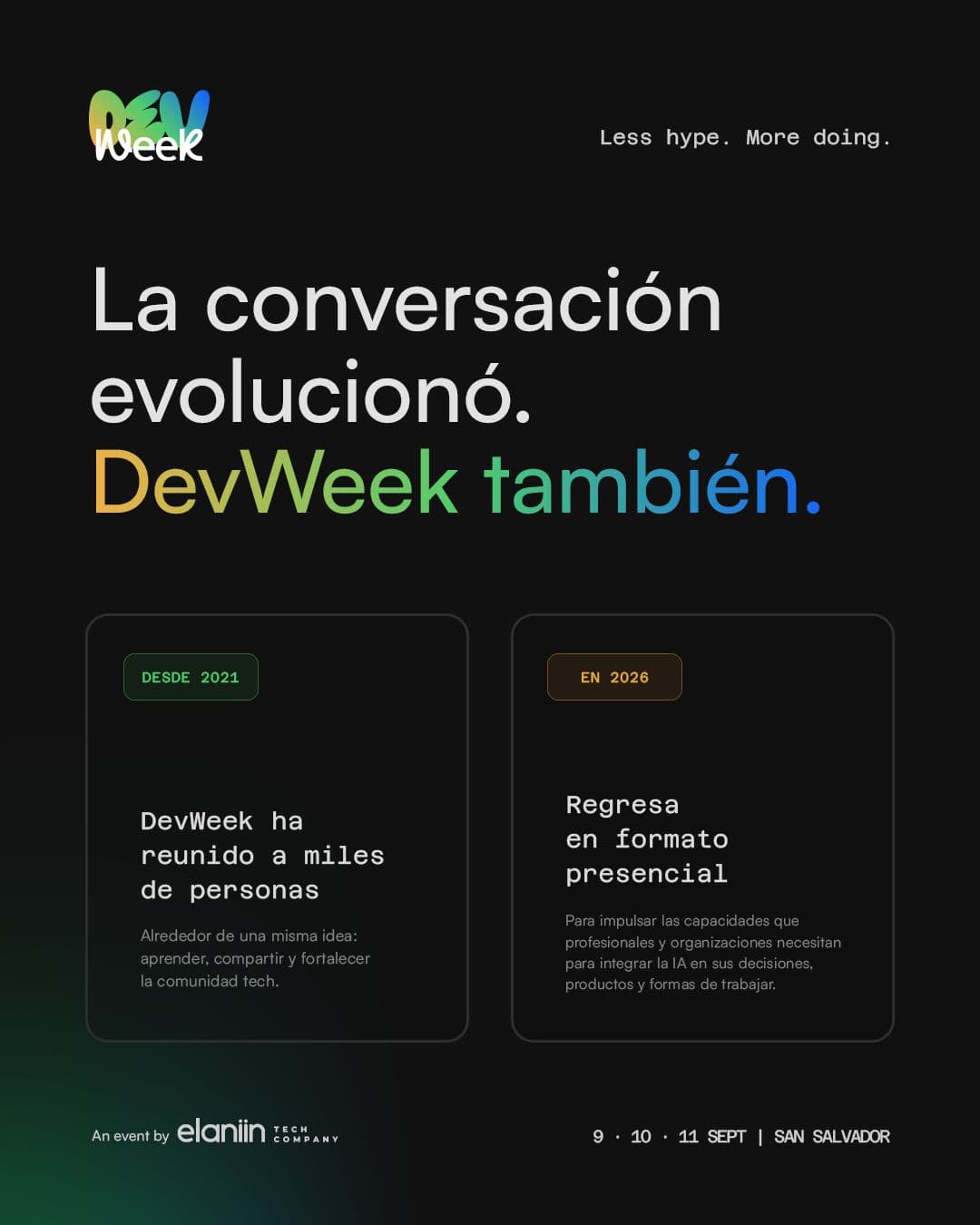
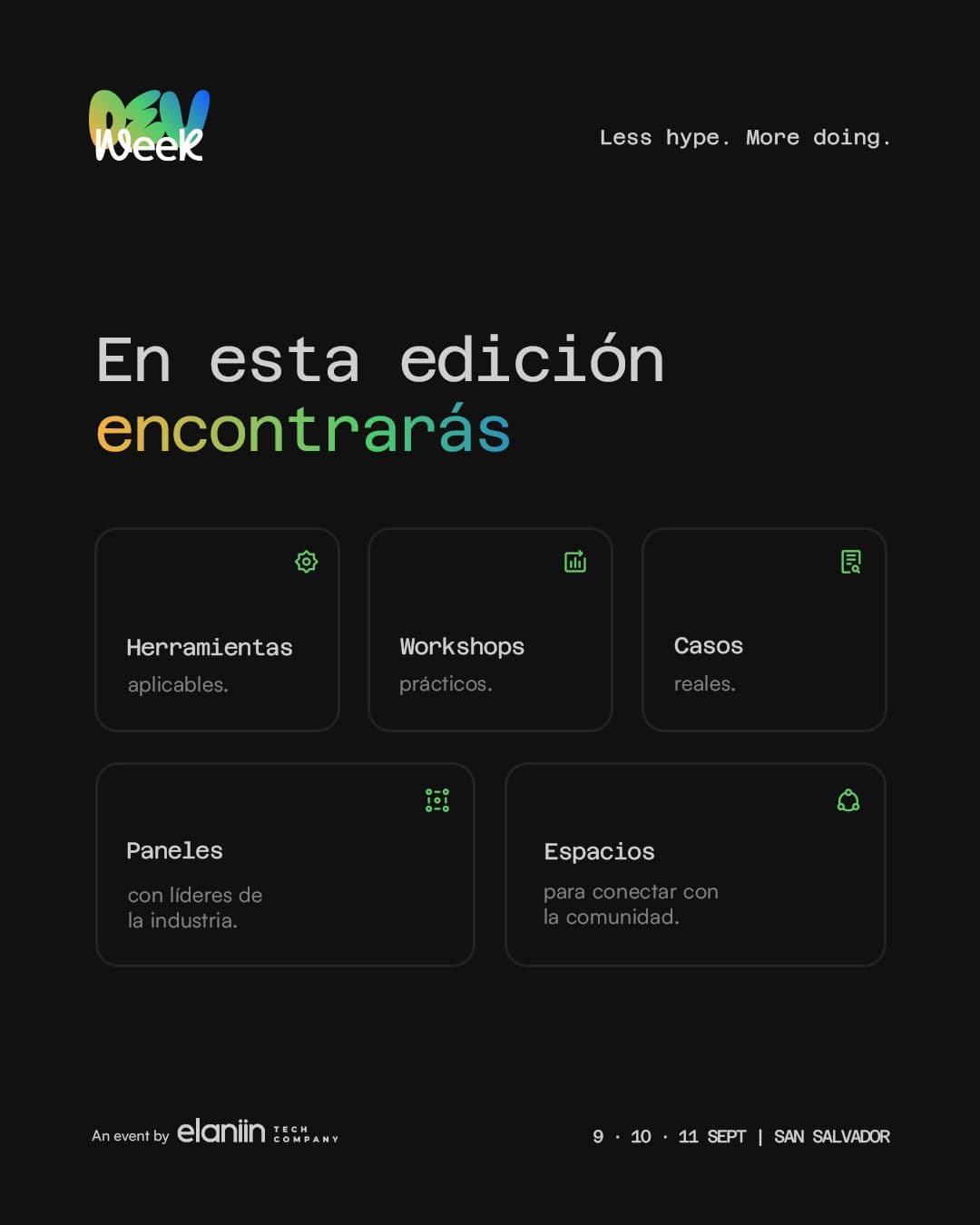
After launch, a five-slide carousel carried the program: what DevWeek is, what you will find, the numbers, and a last call, “Convierte el hype en acción.”
Where AI did come in
It came in where it helped us go further.
In the merch: we never photographed it: the Trust the Code cap and tees were generated with prompts, in Magnific and Adobe Firefly. Each piece needed its own prompt, and I rewrote them several times until the lens, the depth of field and the light matched the concept: a blue, cinematic world where the glow comes from the garment itself. The digital montage was done by hand.
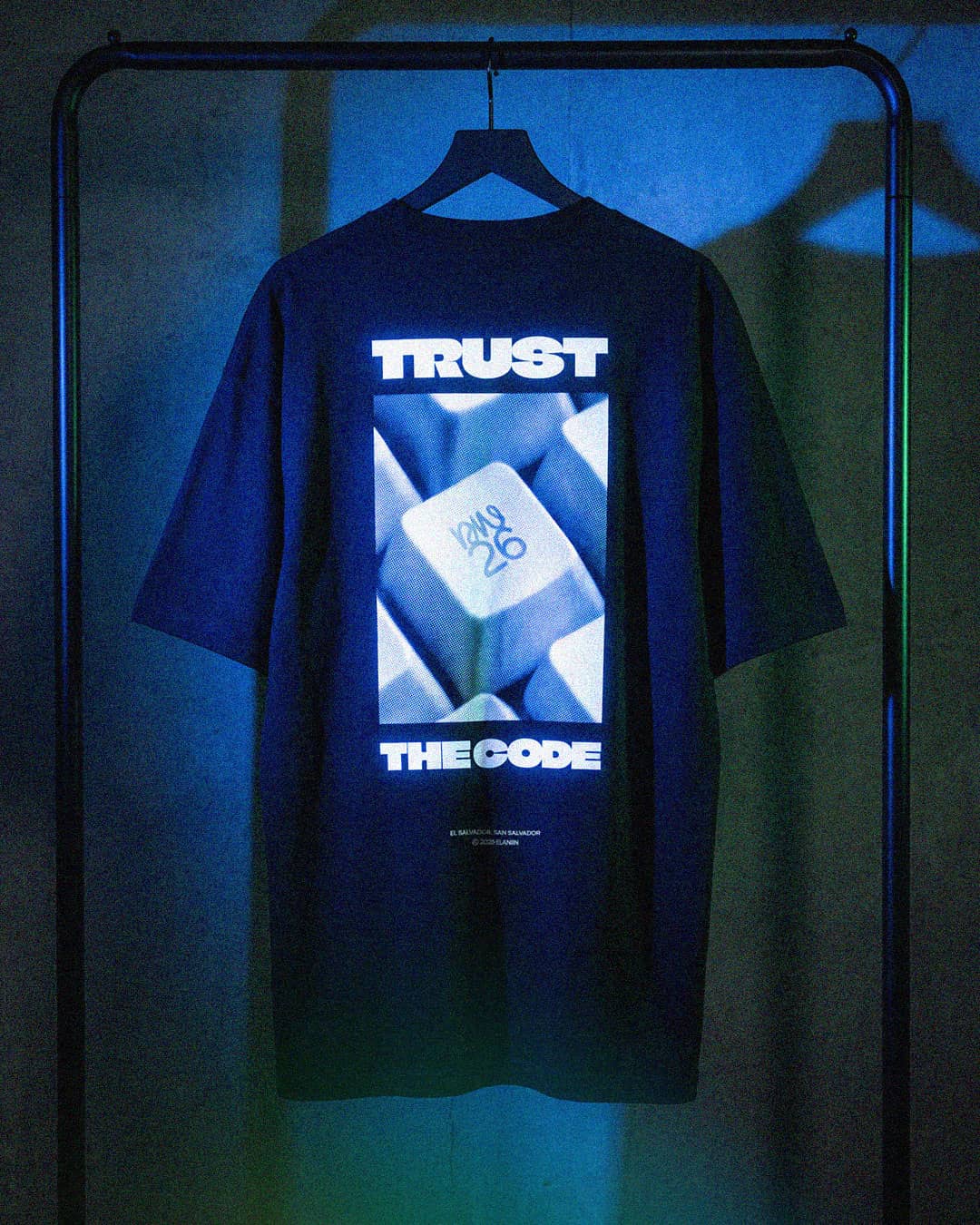
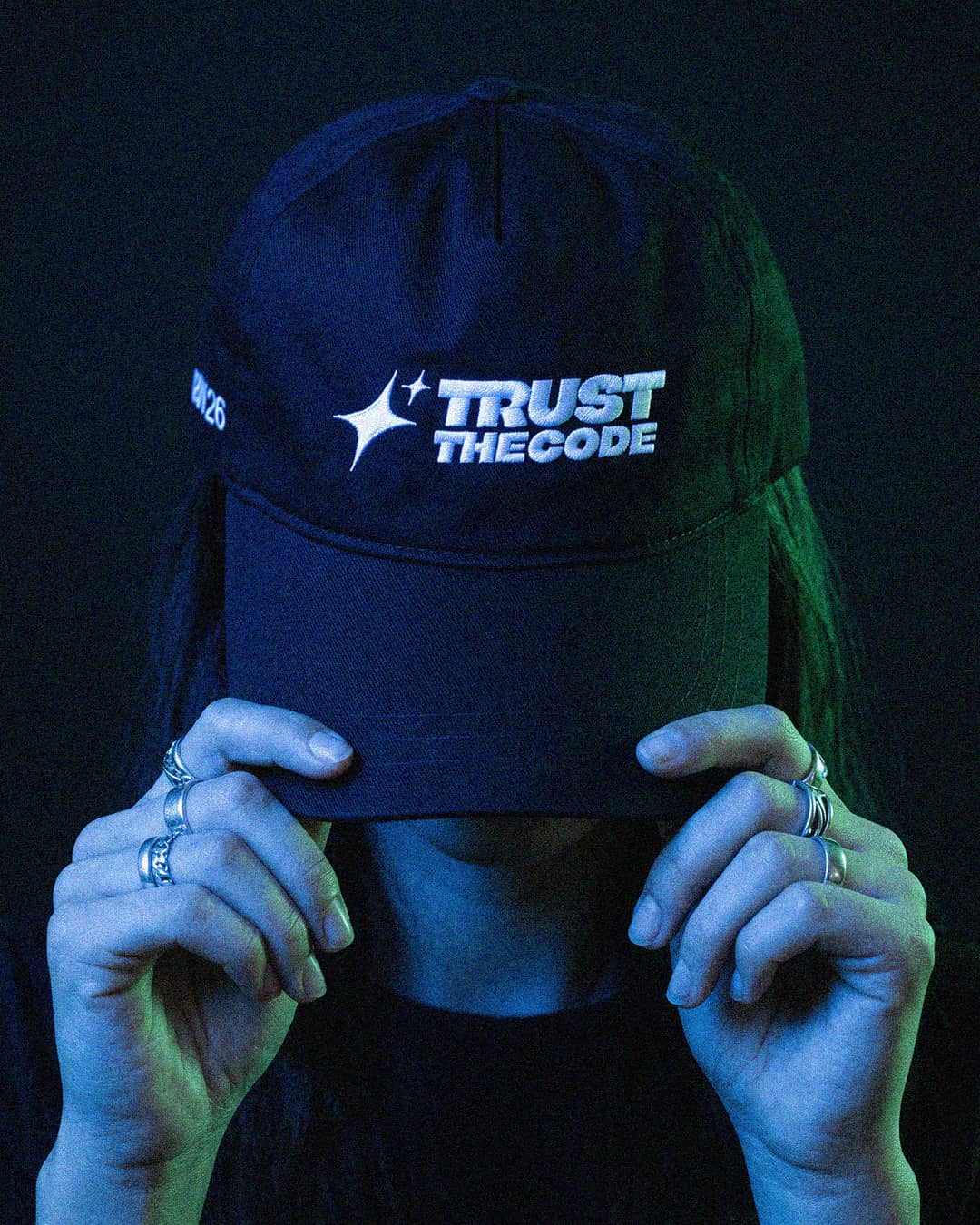
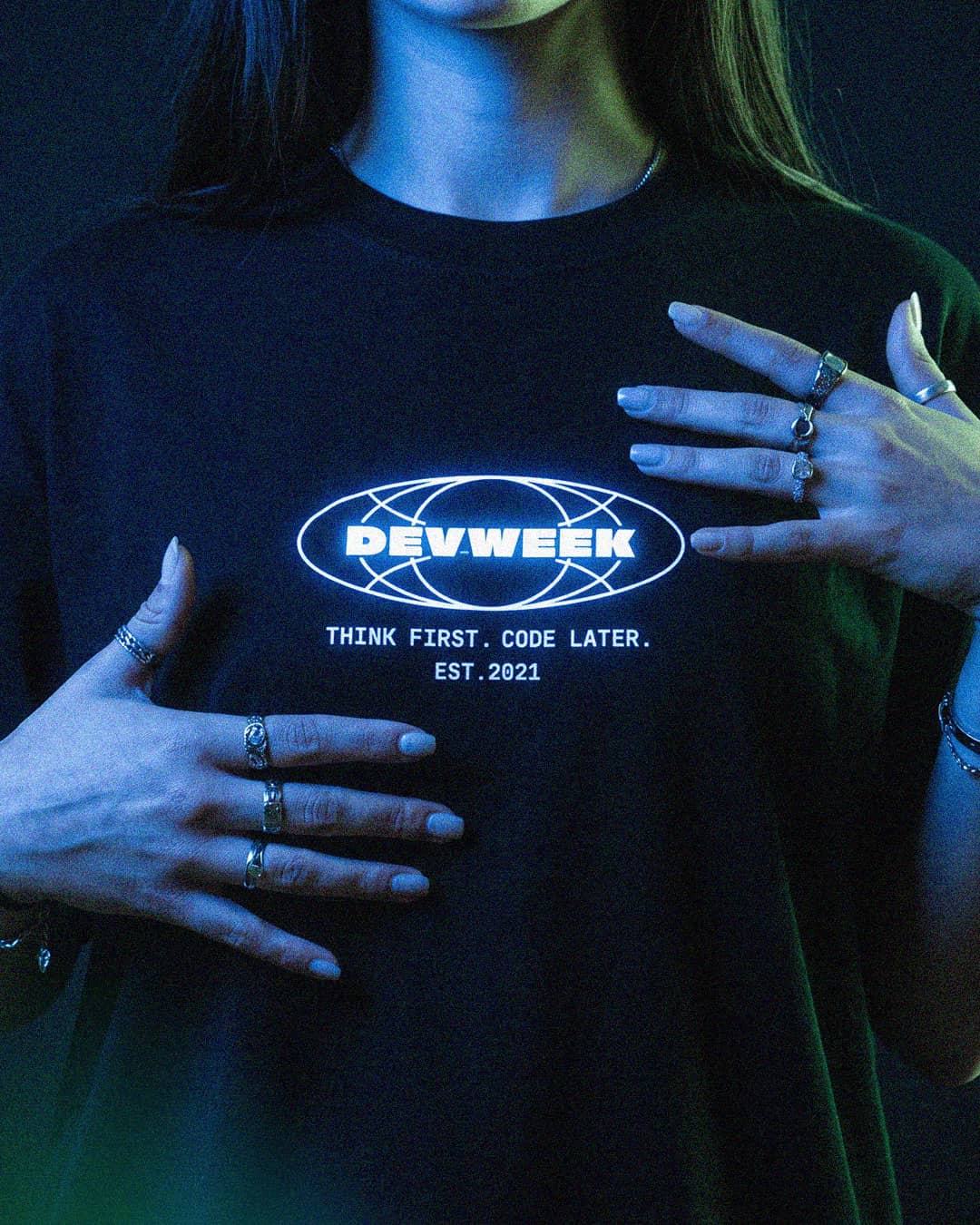
Merch imagery generated with AI
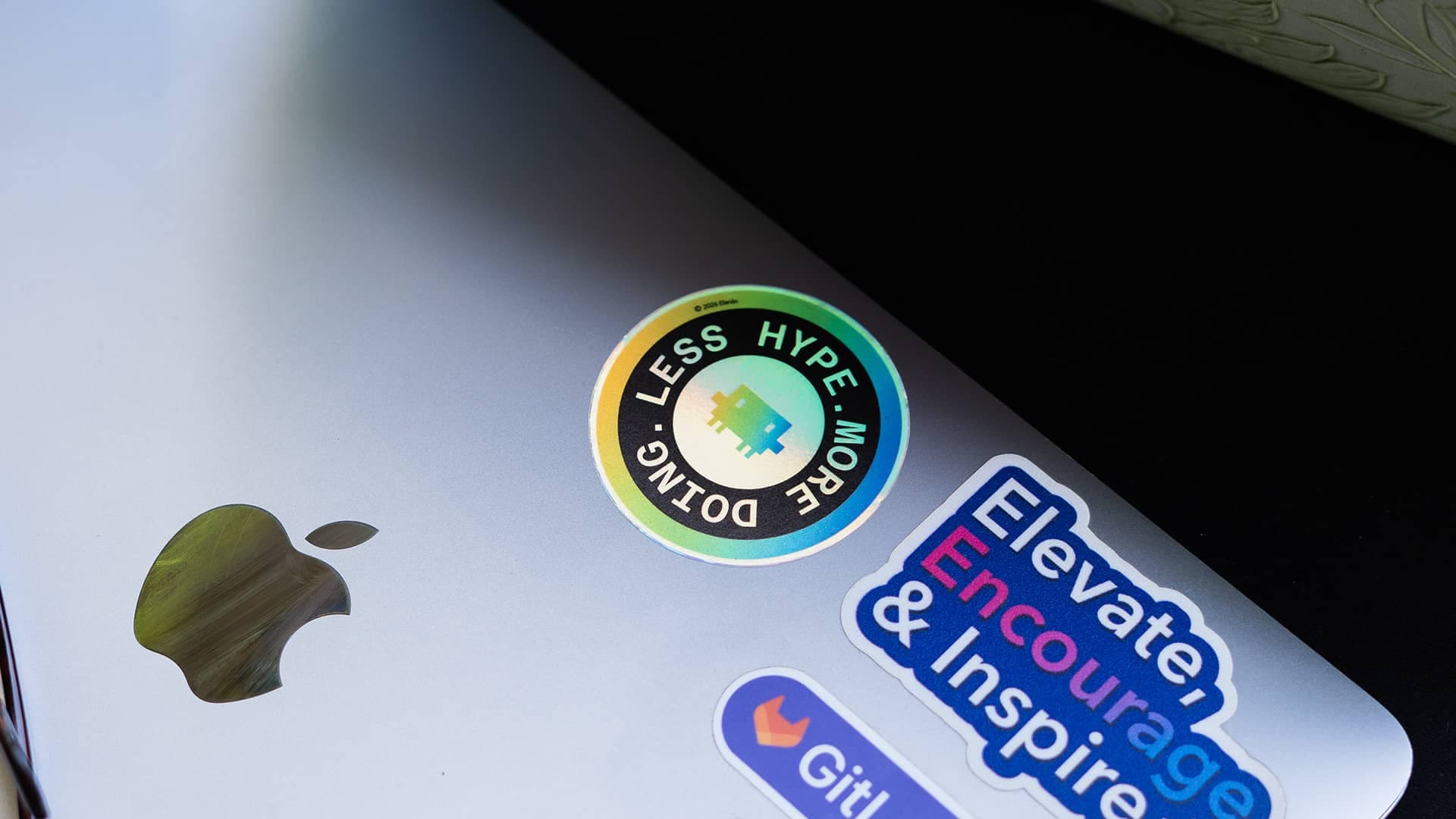
In the 3D: before, someone on the team would model these pieces by hand in Blender. This time we took the stickers we had already designed and, with good prompting, turned them into 3D. Those are the ones you see animated below. The animation, once again, was done by the team.
The landing page we never got to have
In earlier editions we could never build a landing page of our own. We used website builder tools and never felt good about the result: they were very limited and we never got to what we were after.
The funny part is that we are a software company. But the tech team was almost always busy and there was nobody to develop it. It was a debt we carried for years.
This year we did something different: before asking Claude Code for anything, we defined the design system. We took it from the traditional, hand-made side into a format an LLM could understand, with our guidelines, our goals and the vision behind the design. That way the AI designed more accurately and stayed within what we wanted.
With that in place, and after a while of learning to work with AI, I designed and developed the landing page with Claude Code. I described each section, sometimes with a visual reference, and refined it until it looked like what I had in my head. The team took care of deploying it. We finally had one worthy of the event.
It is a single page. Under the headline, a typing effect writes out the week’s topics one after another, and further down come the agenda, the numbers, the speakers and the partners.
This is the real page, running here. Click it to scroll, switch the day, flip a speaker card or change the viewport to see it on mobile.
The day itself
We reached a strategic group, exactly the one we wanted in the room. With a group like that, the panel with three clients felt like a conversation, and the networking at the end was a space to swap contacts and ideas.
It was the idea behind the whole campaign, lived in person: less hype, more doing.